
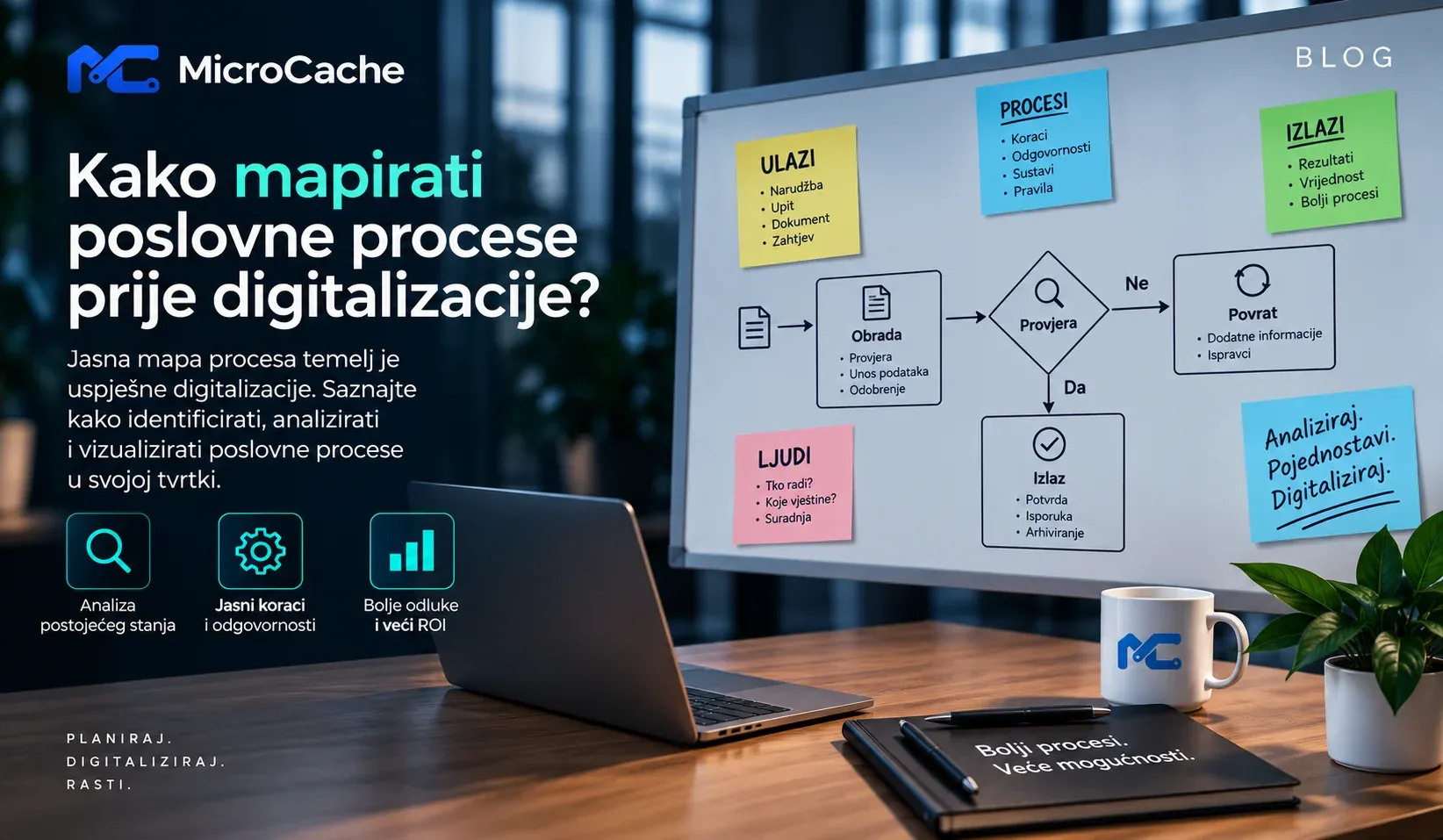
Business Processes: How to Identify What Can Be Automated
Almost every company has tasks that repeat every day.
Employees transfer information between systems, process documents, prepare reports, check statuses, and search for information required to continue their work.
Some of this work is unavoidable. Some can be simplified or automated.
The important part is knowing how to identify the difference.
Which business processes are good candidates for automation?
Start by looking for processes that happen frequently and follow relatively clear rules.
Several signs are particularly useful.
The same information is entered multiple times
If an employee manually copies information from an email or one business system into another, it is worth checking whether those systems can be connected.
Significant time is spent processing documents
Orders, invoices, forms, and other documents often require employees to read information, extract relevant data, and enter it into another system.
Parts of this workflow may be automated while employees continue to review uncertain or sensitive cases.
Work status is checked manually
If employees regularly need to call colleagues or send messages to find the status of an order, work order, or another task, the process may lack adequate digital support.
Information is spread across multiple systems
ERP, CRM, Excel, email, and other tools may perform their individual jobs well.
Problems appear when employees become responsible for manually connecting information between them.
In these situations, integrating existing systems may provide more value than introducing another application.
What shouldn't be automated?
Not every manual task is a problem.
If something happens only a few times per year, the cost of automation may be greater than the value it creates.
The same can apply to processes that constantly change or depend heavily on complex human decisions.
Before developing a solution, understand:
- how frequently the process occurs
- how much time it requires
- how many employees are involved
- how frequently errors occur
- the cost of the existing process
Where does AI fit?
AI is not required for every automation project.
Traditional integrations and business rules are often more reliable for structured data and clearly defined workflows.
AI becomes more interesting when a process involves unstructured information such as emails, documents, or internal knowledge.
The best solution is often a combination of technologies.
Start with one process
Digitalization does not have to begin with a large project.
Choose one process that regularly consumes employee time, measure how it works today, and determine whether there is a simpler approach.
If the results justify the investment, the same approach can gradually be applied to other parts of the business.
At MicroCache, we help companies analyse their business processes and determine where automation, integration, or AI can provide practical value.